I wrote this article on service design for The Irish Times, published on 5 September 2014. Article is at http://www.irishtimes.com/business/designing-services-for-smarter-business-1.1916748 The Apple user or Nespresso drinker appreciates not only the physical good, but the entire experience of interacting with the business A customer’s relationship with a service is often unpleasant and short. But occasionally something … Continue reading Designing services for smarter business
Author: johnnyryan
Sustainable growth, not disruption
An edited version of this piece appears in The Irish Times , 1 August 2014 (online here) In defining the criteria by which the judges of The Startup Academy will adjudicate which companies would be accepted into the programme we have done something radical. Normally a competitive process like this might select only the startups … Continue reading Sustainable growth, not disruption
Design Thinking, and thinking like a child, for product design
This is a slightly shortened piece I wrote for The Irish Times on Design Thinking in organisations. Full article is here http://www.irishtimes.com/business/bring-design-thinking-to-your-product-1.1822064 Bring design thinking to your product Thinking like a child could save your business cash US technology investor Dave McClure coined a maxim that sums this challenge up: “Your solution is not my problem.” … Continue reading Design Thinking, and thinking like a child, for product design
Lean Startup Strategy. Not just for startups.
I spoke to Steve Blank, Alex Osterwalder, and the man who coined "Lean", John Krafcik. Here is what they said. This article appeared in The Irish Times 2 May 2014 see link. “U should apply Lean Start-up Strategy in everything u do. Even ur personal & love relationship. Think about it & makes sense.” Thus tweeted … Continue reading Lean Startup Strategy. Not just for startups.
Press: “Innovation Academy UCD appoints Dr. Johnny Ryan as Executive Director”
Dublin, 8 April 2014: The Innovation Academy, UCD, today announced that it has appointed Dr Johnny Ryan as Executive Director. In his new role Dr. Ryan will take responsibility for the execution of the strategic mission and expansion of the Academy, and management of core operations including staff, programmes, and commercial operations. Dr. Ryan joins the … Continue reading Press: “Innovation Academy UCD appoints Dr. Johnny Ryan as Executive Director”
New role
---- Note: When I wrote this post two years ago I did not complete it. Probably I was preoccupied by taking up the new role. I publish it now with the caveat that this is an early draft, long and meandering. The reader has been warned. ---- Oscar mike. I'm on the move, and taking … Continue reading New role
Big Data R&D for the newsroom
As the ratio between quantity of available information and our capacity to absorb it changes, we must be more selective.
New project: Prevent national health crises by mining public discussion and news to predict vaccination uptake
Prevent national health crises by mining public discussion and news to predict vaccination uptake This is the proposal that I submitted yesterday to the Knight Foundation health data challenge. See the proposal, and vote on it if you like it, at the Knight News Challenge. Vaccines matter. We want to predict uptake by mining news … Continue reading New project: Prevent national health crises by mining public discussion and news to predict vaccination uptake
Newspapers and audiences
I've received survey data back from a study we ran among Irish Times readers over the last week and they show some interesting things. I was interested to learn just how important readers said analysis was as part of their information intake from The Irish Times. We asked respondents what they valued most when they … Continue reading Newspapers and audiences
A look back at ReformCard: the political reform score card
ReformCard is a measurement tool to rank each political party based on the quality of their policies on political reform to inform the election 2011 debate. It provides the 25 proposals for political reform in Ireland which we believe provide the best possible combination to transform the political system and ensure it is fit for purpose in the 21st century.The starting point is that Ireland’s economic crisis exposed the malfunctioning of the political system. We need to change how politics works to ensure this never happens again.
Interview with internet pioneer Steve Crocker
In a bathroom, at three in the morning in April 1969, a graduate student named Steve Crocker started to write one of the most important documents of the last century. Though drafted in humble circumstances Crocker’s document would set the open, inclusive tone of the next half century of Internet engineering culture, and initiate the process of defining the rules that govern virtually all data exchange on the planet.
Silicon Republic interview: innovation at The Irish Times
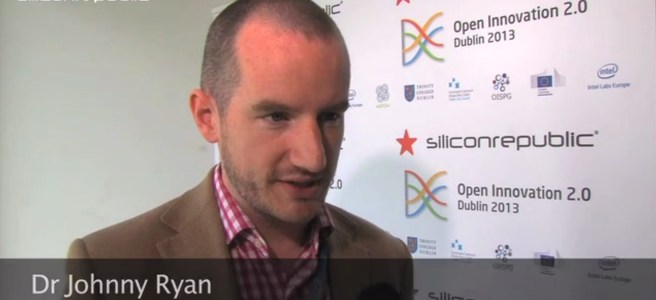
I had an opportunity to set out what we are doing at The Irish Times in innovation, research, and working with startups. http://vimeo.com/66916581 (Hat tip to John Kennedy of Silicon Republic for letting me copy the video to video to display here.)
Advertising’s historic pivot point
This is a piece I originally published in Contagious.An understandable malaise in ad agencies surrounds all things digital. Low revenues on the one hand and a new answerability to metrics on the other are accompanied by a sense that digital formats remain largely underdeveloped, and that new, possibly unwelcome, surprises await. This is a moment … Continue reading Advertising’s historic pivot point
Startup networking at a 153 year old media company
If a 153 year old newspaper is to adapt, to experiment, and take useful risks, it makes sense to work with startups. Since The Irish Times' initial eight week experiment in 2012, both the NYT and the BBC have followed with their own ways of incubating early stage digital businesses. But beyond incubation there is … Continue reading Startup networking at a 153 year old media company
Obit: Aaron Swartz
I wrote this obituary for The Irish Times last week. Aaron Swartz, Born: November 8th, 1986 Died: January 11th, 2013 Aaron Swartz took his own life in an apartment in Brooklyn on January 11th. Though only 26 when he died, Swartz had many claims to fame. At the age of 14, he had co-authored specification 1.0 … Continue reading Obit: Aaron Swartz
Links are sacred (links, newspapers, and copyright)
This is my op ed in The Irish Times, 7 January 2013. In the early 1960s a Harvard graduate student named Ted Nelson developed the idea of ‘hypertext’, a system of digitised links between tidbits of information that would transcend the limitations of printed paper. The idea was wildly ambitious. A user could click various … Continue reading Links are sacred (links, newspapers, and copyright)
The 2012 tech topic, and a guess at the topic of 2013…
A brief note: I was asked to think about the hot topic in tech for 2012, and make a prediction for the hot topic of 2013 by Corriere della sera, an Italian newspaper. It might seem passé, but I think the hot topic of 2012 has been mobile Internet. The ITU disclosed in June 2012 that mobile‐broadband … Continue reading The 2012 tech topic, and a guess at the topic of 2013…
An experiment in startups working with news media companies: looking back at The Irish Times Digital Challenge
(This post also appeared in The Irish Times on 4 October 2012.) LAST FRIDAY, at The Workman’s Club on Wellington Quay in Dublin, an Irish technology start-up company called GetBulb was announced as the overall winner of The Irish Times Digital Challenge. GetBulb has produced a system that can rapidly create data visualisations suitable for … Continue reading An experiment in startups working with news media companies: looking back at The Irish Times Digital Challenge
Piece on 3D printing in The Irish Times
The Irish Times, 24 September 2012: "3D printers to manufacture a revolution". (This is a condensed version of a longer piece - read full piece here) THE THREE trends toward cheaper 3D printing, consumer co-creation, and digital distribution should be understood as part of a great adjustment. The current stage of 3D printing is analogous to the … Continue reading Piece on 3D printing in The Irish Times
Week One: The Irish Times Digital Challenge
http://www.youtube.com/watch?v=_A_zI4oMWwM I PREVIOUSLY POSTED THIS ON THE HUFFINGTON POST. RE POSTED HERE. Some months ago I set up The Irish Times Digital Challenge to invite digital entrepreneurs to propose ways to work with The Irish Times. Almost 81 early stage digital companies applied, of which 14 were invited to pitch in person. From this a … Continue reading Week One: The Irish Times Digital Challenge
Startups and The Irish Times
The Irish Times is a media company with a long history. To get a sense of this reflect on the fact that it was already half a century old when one of its printing presses was burnt down during the 1916 Rising, when the rebels used its massive rolls of newsprint as barricades. In 1994, … Continue reading Startups and The Irish Times
5 rules: the smallest element of participation is now the individual node.
Video of a talk I gave in Oslo at the Norwegian Annual Communications/PR Forum "5 rules for PR in the digital era".
Crowd Manufacturing
Long after his death Isaac Newton's unpublished papers finally revealed a hidden obsession with alchemy. Newton was interested in particular with the Philosopher's Stone, a proto-scientific cum mystical experiment reputed to transmutate one material into another. The Crown feared that the alchemists would devalue the coinage if they did one day manage to make gold … Continue reading Crowd Manufacturing
The Internet makes trust and insight scarce commodities, and makes newsroom veterans more valuable
Recently I have been looking at the newspaper as a service and as a business (for reasons that will become apparent later). Something is becoming clear. While the Internet makes information plentiful, and this in turn may be a challenge to some aspects of the newspaper business, deep insight and trust remain as scarce as … Continue reading The Internet makes trust and insight scarce commodities, and makes newsroom veterans more valuable
Interview on the history + future of the Net
Jerry Brito, a tech thinker and writer for Time Magazine interviewed me about my recent book, A history of the Internet and the digital future as part of his 'Surprisingly Free' podcast series with techies. Jerry has an interesting background: he's an academic, but he has also lead some interesting projects - see below - … Continue reading Interview on the history + future of the Net
The 3 sided product problem
This post is also on Huffington Post. The first item ever sold on eBay was a broken laser pointer. Startled that someone had bid for the broken item eBay’s founder, Pierre Omidyar, contacted the bidder to ask whether he understood that the laser pointer for which he had bid $14.83 was in fact broken? The … Continue reading The 3 sided product problem
“Peer-to-Peer Retail”: Social marketing/commerce is not just about ‘likes’
Owjo, the social commerce startup where I worked as evangelist/marketer/product guy, had a big problem. Its offering was so big, and so potentially transformative, that prospective customers couldn't get a quick grasp of it. Part of my job was to break the product down, so that discrete offerings could be orientated to specific markets. The … Continue reading “Peer-to-Peer Retail”: Social marketing/commerce is not just about ‘likes’
A Moore’s Law for 3D printing? (I need data)
Moore's Law (transistors per chip) and Hendy's Law (pixels per dollar) have been useful predictors of where processing power and digital photography were going. Something similar would be really useful for 3D printing. I tried to plot a law for the quality of print per dollar of 3D printers for an article I have been … Continue reading A Moore’s Law for 3D printing? (I need data)
3D printing – Johnny Ryan talks with Vyomesh Joshi, EVP of HP’s printing business
HP are interesting because they are the first major manufacturer to enter the 3D printing space, partnering last year with Stratasys to offer 3D printers directly to designers and architects at the sub $20,000 range. So I questioned Vyomesh Joshi, Executive Vice President of HP's Imaging and Printing Group, about where HP is going. Johnny … Continue reading 3D printing – Johnny Ryan talks with Vyomesh Joshi, EVP of HP’s printing business
Owjo may be about to save Jaron Lanier’s “lost generation” of musicians, and put Kevin Kelly’s 1,000 True Fans in charge of distribution
Owjo may be about to save Jaron Lanier's "lost generation" of musicians, and put Kevin Kelly's 1,000 True Fans in charge of distribution.
Principles, Norms, and Constraints: building a new national approach to digital issues
Discussion document for the new IIEA National Digital Principles Group: We are present at a unique moment in time when the shape and character of the emerging digital area is becoming clear. To grasp the opportunity, consider as historical precedents the decades following Gutenberg’s Press, or early decades of the Industrial Age. Strategic and inventive … Continue reading Principles, Norms, and Constraints: building a new national approach to digital issues
Piece in Wired: “Dublin Web Summit highlights the under-reported successes of Irish tech”
Following on from my previous piece in Wired UK on the optimism at the Pub Summit, this piece takes a macro snapshot of the Dublin startup scene during last week's Web Summit. See Web Summit story on Wired UK here, or read on below.. Last Friday was a big tech day for Dublin. Web game … Continue reading Piece in Wired: “Dublin Web Summit highlights the under-reported successes of Irish tech”
Frederick Taylor, DEC, and Zynga: how does “idea fuel” filter to the top of perpetual beta organisations?
I broke bread with the speakers after the Dublin Web Summit on Friday (see my coverage of the Summit for Wired UK), and sat opposite Marcus Segal, Zynga's Chief Operating Officer for Games. Segal is faced with a hell of a problem: Zynga is growing like a super nova, and the model it uses relies … Continue reading Frederick Taylor, DEC, and Zynga: how does “idea fuel” filter to the top of perpetual beta organisations?
The “Android Paradox” – Google’s bright future at both ends of the market
Update 9 June 2011: What a mess. My original "Google's bright future at both ends of the market" appeared in Business & Economy as "Android apps will be of low quality". This is absolutely not what my line of reasoning was in the piece. I have asked B&E to change the title to something more … Continue reading The “Android Paradox” – Google’s bright future at both ends of the market
My piece in Wired UK – “Optimism in Dublin’s start-up scene: Pub Summit 2011 report”
My piece for Wired UK on the start up scene in Ireland, and the Pub Summit last night, is copied below. See article on Wired. Text of the article below: Despite the rain, and economic collapse, Dublin seems to be the place to be at the moment. A long line of entrepreneurs and investors queued … Continue reading My piece in Wired UK – “Optimism in Dublin’s start-up scene: Pub Summit 2011 report”
Optimism in Ireland
Last night at the Pub Summit I spoke to Eoghan Jennings, ex-CFO of Xing, and the man behind the new Bootcamp accelerator that will be launching in 2012. I was struck by his optimism, and he gave me 12 reasons why Ireland is a good place for startups (credit to Colm Rafferty from Maples & … Continue reading Optimism in Ireland
My overview of 3D printing in Fortune Magazine
My basic overview of 3D printing appears in the current (Fortune 500) issue of Fortune. This piece lays out some rudimentary basics, but I am currently working on a more detailed piece - on what I call the "crowd manufacturing cycle" (short note on this idea in previous post titled "Objects 2.0"). Also, see a … Continue reading My overview of 3D printing in Fortune Magazine
Mobile OS Wars – the new rules of the mobile ecology
I wrote a piece for India's Business & Economy on the mobile OS war. Draft text below... (online version article available here) The eco system is key. The mobile OS giants have one guiding principle: the OS with the best selection of software applications available for its users will be most attractive to consumers, and … Continue reading Mobile OS Wars – the new rules of the mobile ecology
Plastic information, niche audiences, extruded media, and network governance
De Filosoof (The Philosopher), a journal edited by graduate students and faculty at the University of Utrecht, asked me to respond to some searching questions. Three are copied below [note: this is unedited draft text]... From the very beginning Internet has challenged social, intellectual and political hierarchies. RFC 3, released in April 1969, ‘established the … Continue reading Plastic information, niche audiences, extruded media, and network governance
Q&A about the history of the Internet with the Epoch Times
The Epoch Times published a Q&A here with me about the book. We covered the idea behind the book and politics. Text below... The Internet has integrated itself into nearly every aspect of modern life, following users on the cell phone, at work, and at home. While the Web grows, however, its history and future … Continue reading Q&A about the history of the Internet with the Epoch Times